



Adenosine A2B receptor (A2BR)
Adenosine A2B receptor (A2BR) is a low-affinity adenosine receptor that becomes functionally important when extracellular adenosine rises during inflammation, ischemia, or tissue injury[1][2]. Mechanistically, A2BR couples mainly to Gαs, elevates cAMP, and can also engage Gαq and MAPK pathways that regulate cytokine production, barrier responses, fibrosis, and cell metabolism[3][4]. In acute inflammatory models, A2BR signaling limits vascular adhesion, leukocyte recruitment, pulmonary neutrophilia, cytokine release, and ventilator-induced lung injury[2][5]. In chronic lung injury models, selective A2BR antagonism with CVT-6883 reduced pulmonary inflammation, fibrosis, and alveolar airspace enlargement, indicating context-dependent disease relevance[3]. Compared with A2AR, A2BR has lower adenosine affinity, and extracellular loop 2 contributes to this A2A/A2B affinity distinction[1][6]. For experimental applications, BAY 60-6583 activates A2BR-dependent epithelial barrier repair and astrocyte glycolytic signaling, whereas PSB-603 and related xanthines provide selective antagonist tools for receptor labeling and functional blockade[4][7][8].
References:
- [1]. Liang BT, et al. Adenosine A2a and A2b receptors in cultured fetal chick heart cells. High- and low-affinity coupling to stimulation of myocyte contractility and cAMP accumulation. Circ Res. 1995 Feb;76(2):242-51. [Content Brief]
- [2]. Yang D, et al. The A2B adenosine receptor protects against inflammation and excessive vascular adhesion. J Clin Invest. 2006 Jul;116(7):1913-23. [Content Brief]
- [3]. Sun CX, et al. Role of A2B adenosine receptor signaling in adenosine-dependent pulmonary inflammation and injury. J Clin Invest. 2006 Aug;116(8):2173-2182. [Content Brief]
- [4]. Aherne CM, et al. Epithelial-specific A2B adenosine receptor signaling protects the colonic epithelial barrier during acute colitis. Mucosal Immunol. 2015 Nov;8(6):1324-38. [Content Brief]
- [5]. Eckle T, et al. A2B adenosine receptor signaling attenuates acute lung injury by enhancing alveolar fluid clearance in mice. J Clin Invest. 2008 Oct;118(10):3301-15. [Content Brief]
- [6]. De Filippo E, et al. A2A and A2B adenosine receptors: The extracellular loop 2 determines high (A2A ) or low affinity (A2B ) for adenosine. Biochem Pharmacol. 2020 Feb;172:113718. [Content Brief]
- [7]. Theparambil SM, et al. Adenosine signalling to astrocytes coordinates brain metabolism and function. Nature. 2024 Aug;632(8023):139-146. [Content Brief]
- [8]. Borrmann T, et al. 1-alkyl-8-(piperazine-1-sulfonyl)phenylxanthines: development and characterization of adenosine A2B receptor antagonists and a new radioligand with subnanomolar affinity and subtype specificity. J Med Chem. 2009 Jul 9;52(13):3994-4006. [Content Brief]
-
Adenosine A2B receptor (A2BR) Related Products (28)
Related Products (28)

- 1
- 2
-
Adenosine 5'-monophosphate disodium
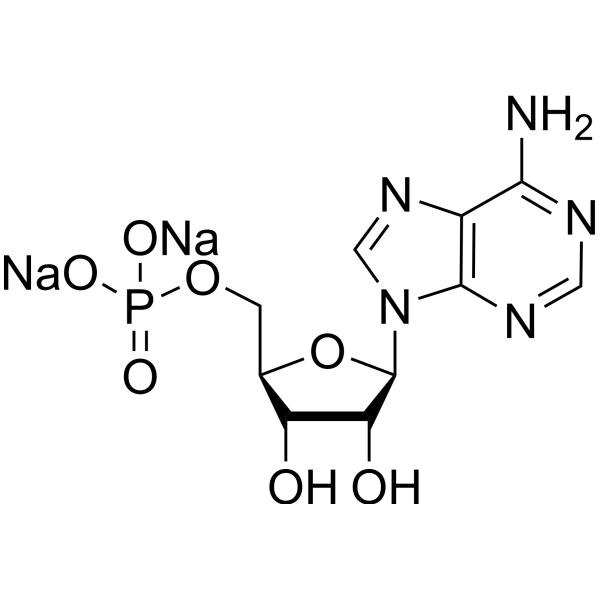 0 ImagesAdenosine 5'-monophosphate disodium is an orally active purine nucleotide, and participates in ATP metabolism. Adenosine 5'-monophosphate disodium is also a ligand for adenosine 2B receptor. Adenosine 5'-monophosphate disodium can activate AMPK in skeletal muscle, and ameliorates insulin resistance and impaired glucose metabolism. Adenosine 5'-monophosphate disodium can be used for research of diabetes.
-
PSB-1115
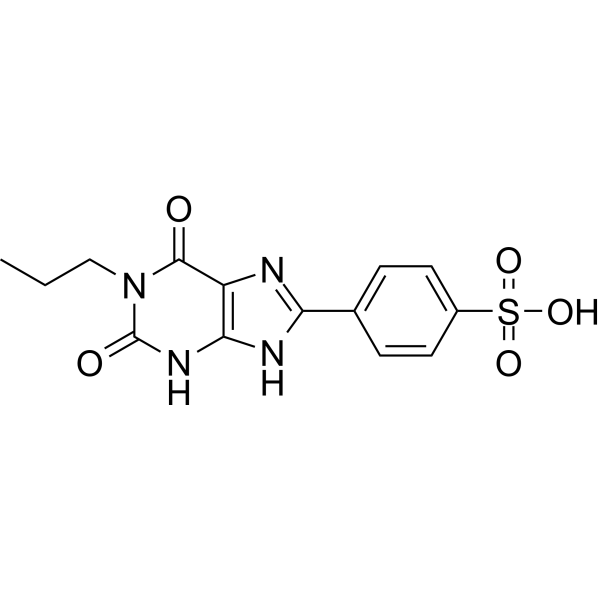 0 ImagesPSB-1115 is a selective A2B Adenosine Receptor antagonist. PSB-1115 inhibits the 2,4,6-trinitrobenzenesulfonic acid (TNBS)-induced contraction inhibition of acetylcholine (ACh).
-
PSB36
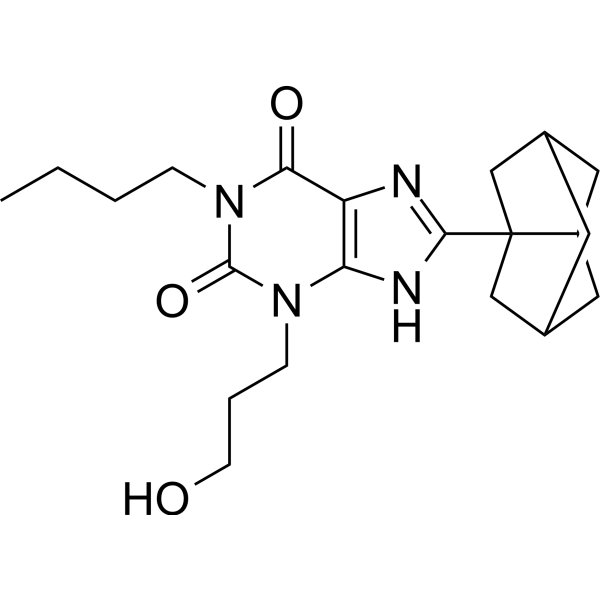 0 ImagesPSB36 is a highly selective A1 adenosine receptor antagonist, with a Ki of 0.12 nM and a Kd of 0.7 nM. Systemic administration of PSB36 reduces formalin- and Carrageenan (HY-125474)-induced edema in mice and decreases pain-related behaviors, with no local paw activity. PSB36 prolongs the APD90 of rat and human atria, produces a frequency-dependent prolongation of rat atrial ERP, increases the diastolic threshold of rat atria, and shortens the duration of atrial fibrillation episodes. PSB36 can be used in research related to inflammatory pain, inflammatory hyperalgesia, edema and atrial fibrillation.
-
ISAM-140
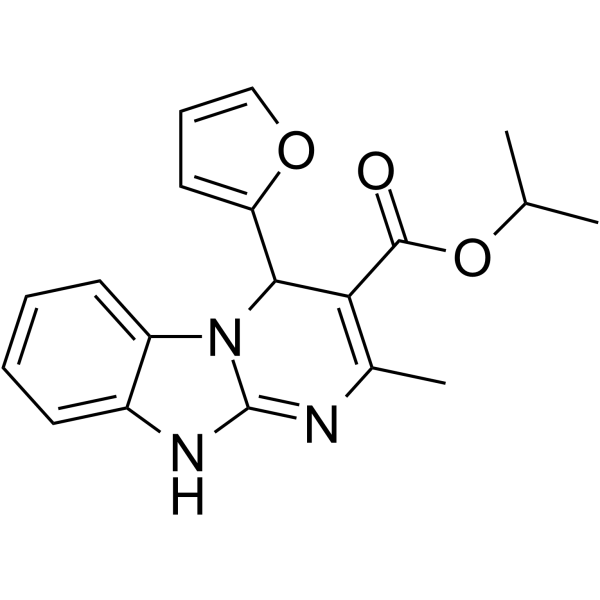 0 ImagesISAM-140 (22b) is a potent and highly selective A2B adenosine receptor antagonist with a Ki of 3.49 nM.
-
Adenosine receptor inhibitor 1
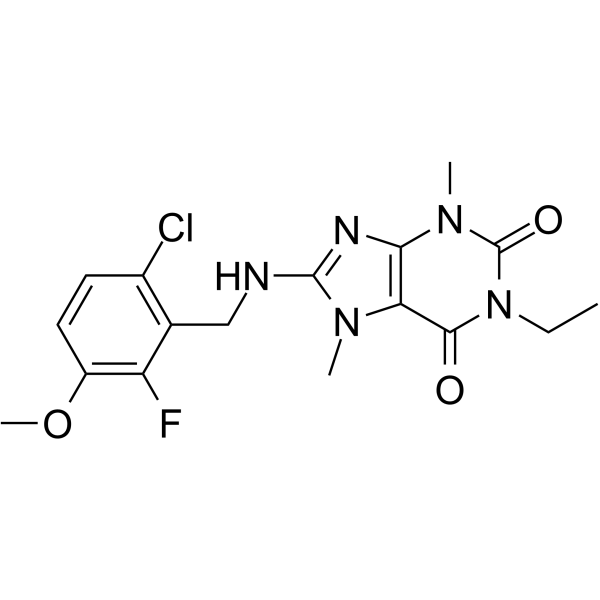 0 ImagesAdenosine receptor inhibitor 1 is a potent and selective adenosine receptor (AR) inhibitor with Ki values of >1000, 68.5, >1000, >1000 nM for A1AR, A2AAR, A2BAR, A3AR, respectively. Adenosine receptor inhibitor 1 shows antinociceptive activity, anti-inflammatory effect and peripheral analgesic effect. Adenosine receptor inhibitor 1 has the potential for the research of cancer or neurodegenerative diseases.
-
INCB106385
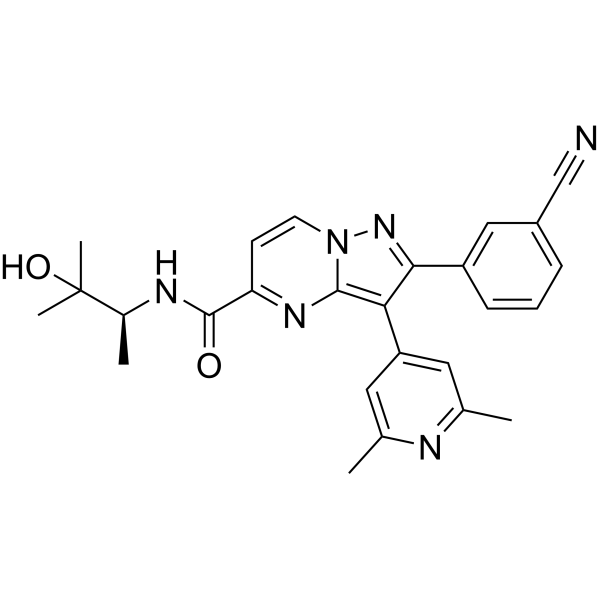
 0 ImagesCat. No.: HY-184213CAS No.: 2408260-34-2INCB106385 is an orally active A2A/A2B adenosine receptor antagonist, with an IC50 value of 4.4 nM for cAMP inhibition at the A2A adenosine receptor and an IC50 value of 6.4 nM for cAMP inhibition at the A2B adenosine receptor. INCB106385 inhibits the pCREB signaling pathway in immune cells, blocks adenosine-mediated immunosuppression in the tumor microenvironment, and induces tumor regression. INCB106385 exhibits efficacy as a monotherapy or in combination with anti-PD-1 antibodies in colon cancer models. INCB106385 can be used for the research of colon cancer.
-
MK-1088
 0 ImagesCat. No.: HY-183599CAS No.: 2433765-51-4MK-1088 is an orally active A2A/A2B adenosine receptor antagonist with human A2A Ki of 0.31 nM, human A2B Ki 5.3 nM. MK-1088 blocks receptor downstream signaling, inhibits CREB phosphorylation and reverses adenosine-mediated immunosuppression. MK-1088 restores TNF−α release and enhances tumor immune surveillance. MK-1088 can be used for the research of cancer[1].
-
M1069
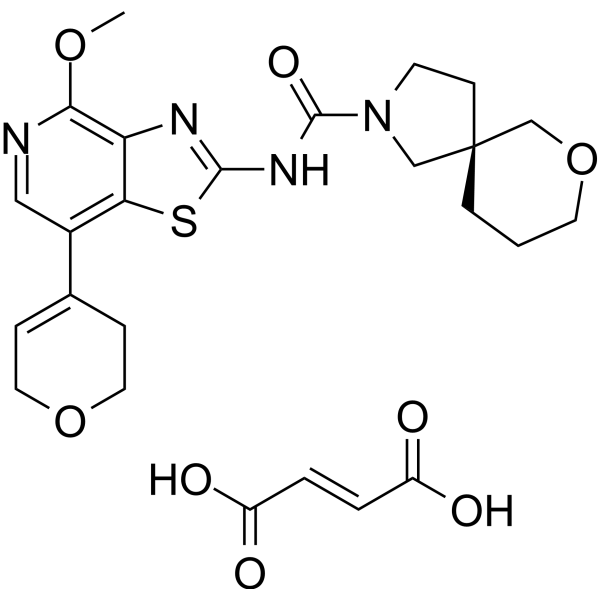 0 ImagesM1069 is a selective and orall active, dual A2A/A2B adenosine receptor antagonist with a selectivity of >100 fold against the A1 and A3 receptors. M1069 counteracts immune-suppressive mechanisms of adenosine, and exhibits anti-tumor activity.
-
Adenosine receptor inhibitor 2
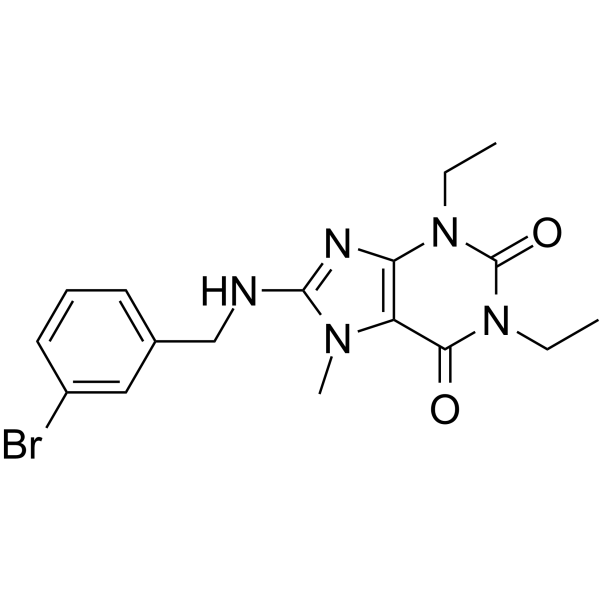 0 ImagesAdenosine receptor inhibitor 2 (compound 14b) is a potent AR (adenosine receptor) inhibitor. Adenosine receptor inhibitor 2 shows dual affinity toward A1/A2A ARs with higher affinity for the A1- than the A2AAR. Adenosine receptor inhibitor 2 has Ki values of 52.2 nM for the A1AR and 167 nM for the A2AAR.
-
LUF5834
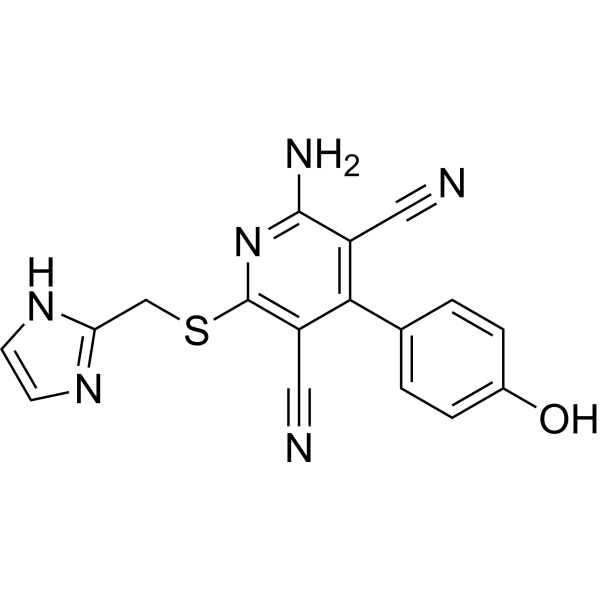 0 ImagesLUF5834 is a selective A2B adenosine receptor (A2BR) partial agonist (EC50 = 12 nM). LUF5834 is also a partial A1/A2A adenosine receptor agonist (lacking selectivity) with Ki values of 2.6 and 28 nM, respectively.
-
MRE 0094
 0 ImagesSynonyms: SonedenosonMRE 0094 (Sonedenoson) is a selective activator for adenosine receptor A2A, with a Ki of 490 nM. MRE 0094 exhibits anti-platelet and anti-inflammatory activities.
-
8-(p-Sulfophenyl)theophylline
 0 ImagesSynonyms: 8-SPT; 8-pSPT8-(p-Sulfophenyl)theophylline (8-SPT) (compound 2) is an adenosine A2B receptor antagonist, with a Ki of 1330 nM for A2B human recombinant.
-
2-Chloro-3-deazaadenosine
 0 ImagesCat. No.: HY-W777125CAS No.: 40656-71-12-Chloro-3-deazaadenosine is agonists for adenosine receptor, with Kis of 0.3, 0.08, 25.5 and 1.9 μM, for A1, A2A, A2B, and A3 receptors, respectively.
-
LAS38096
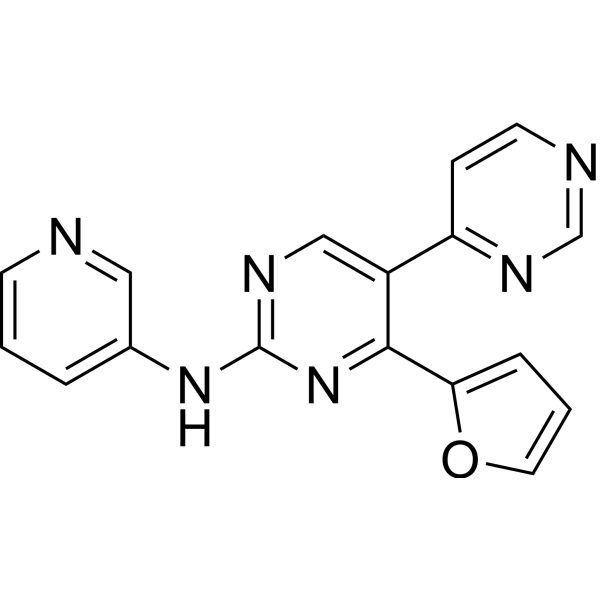 0 ImagesCat. No.: HY-111295CAS No.: 851371-22-7LAS38096 is a potent, selective, and efficacious A2B Adenosine Receptor antagonist, with a Ki of 17 nM.
-
Adenosine receptor antagonist 7
 0 ImagesCat. No.: HY-179248CAS No.: 2570904-69-5Adenosine receptor antagonist 7 is an orally active triple A1/A2A/A2B adenosine receptor antagonist with Ki values of 1.5, 0.6 and 21 nM. Adenosine receptor antagonist 7 shows potent inhibitory activity (IC50 = 0.8 nM) of cAMP production in A2AR-HEK293 cells. Adenosine receptor antagonist 7 can enhance infiltration of effector T cells and increase the CD8+/Treg ratio companied with Avelumab (HY-108730). Adenosine receptor antagonist 7can be used for the research of cancer, such as colon cancer.
-
A2AAR antagonist 4
 0 ImagesCat. No.: HY-175487CAS No.: 3114596-57-2A2AAR antagonist 4 is an orally active A2A Adenosine receptor antagonist with a Ki of 0.36 nM and a KB of 1 nM at hA2AAR. A2AAR antagonist 4 fully inhibits hA2AAR and hA2bAR at 10 μM. A2AAR antagonist 4 can be used for research of cancer, such as MC38 tiumor.
-
ATL444
 0 ImagesCat. No.: HY-167905CAS No.: 867054-13-5ATL444 is a adenosine receptor antagonist, with Ki values of 7.0, 2.5, 61.8, >1000 nM for rA1AR, rA2AAR, rA2BAR, rA3AR, respectively.
-
A2AAR/HDAC-IN-1
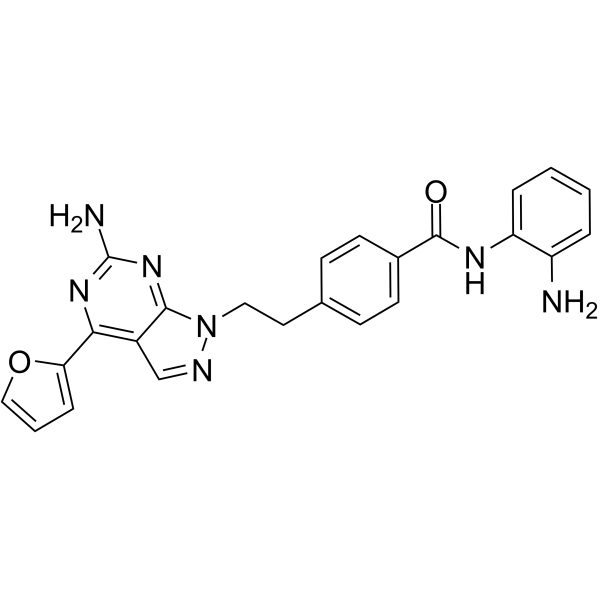 0 ImagesCat. No.: HY-143324CAS No.: 2767560-51-8A2AAR/HDAC-IN-1 (compound 14c) is an orally active, potent and balanced A2AAR/HDAC dual inhibitor, with a Ki of 163.5 nM for A2AAR and an IC50 of 145.3 nM for HDAC1. A2AAR/HDAC-IN-1 shows anticancer activity.
-
Adenosine receptor antagonist 6
 0 ImagesCat. No.: HY-175195CAS No.: 2913578-04-6Adenosine receptor antagonist 6 is an orally active and selective A2A adenosine receptor (A2AAR) antagonist, with a Ki of 19.18 nM. Adenosine receptor antagonist 6 inhibits 5’-N-ethylcarboxamide adenosine (NECA) (HY-103173)-mediated cAMP production (IC50 = 0.089 μM) and immunosuppression, while promoting IL-2 and IFN-γ secretion. Adenosine receptor antagonist 6 abolishes the immunosuppressive effects of adenosine on T-cell activation and cytokine release. Adenosine receptor antagonist 6 inhibits tumor growth in a CT26/MC38 xenograft model. Adenosine receptor antagonist 6 can be used for the study of colon cancer.
- 1
- 2



